Source Competition Style Pickleball Net with Lockable Universal Wheels for Tournaments, Training, and Events
Compare 30 competition style pickleball net with lockable universal wheels options from verified Chinese manufacturers. These nets feature customizable logos, PE/Polyester materials, and sizes ranging from 6.7m to 10ft for professional players, youth, and children.
Key considerations
Products List








Comprehensive Sourcing Guide
Sourcing Guide for Competition-Style Pickleball Nets with Lockable Universal Wheels
Understanding the Core Product Specifications and Dimensions
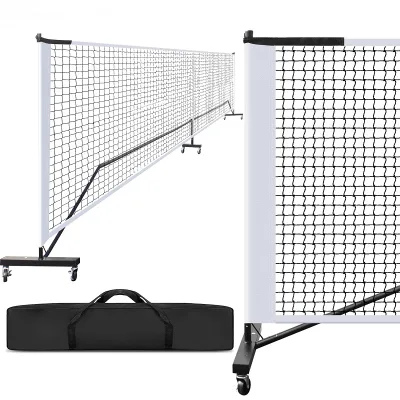
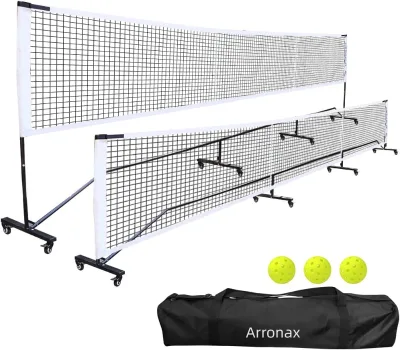
When sourcing a competition-style pickleball net equipped with lockable universal wheels, the primary objective is to identify equipment that meets the rigorous demands of tournament play while ensuring portability and stability. Based on the available product data, the standard dimension for a full-size competition net is approximately 6.7 meters in length by 0.91 meters in height. This aligns with the observed specification of "6.70.91m" and "6.7m0.9m" found in the product attributes. For buyers seeking a "22FT Pickleball Net with Wheels," it is critical to verify that the 22-foot length (approximately 6.7 meters) is consistent with the width of the playing court to ensure regulatory compliance.
The physical construction of the net is equally vital. The material composition is typically listed as PE (Polyethylene), Polyester, or PP (Polypropylene). Specific product entries highlight "Polyester Fibre" as a material option, which is often preferred for its durability and resistance to abrasion. The mesh shape is consistently described as "Square," a standard configuration that ensures uniform ball bounce and visibility. Buyers must scrutinize the mesh density and tensile strength, as the product attributes mention "Tear Strength High Tenacity" and "Abrasion Resistance" as key properties. These attributes suggest that the net is designed to withstand repeated use and the friction of balls striking the mesh during high-intensity matches.
The packaging and shipping dimensions also provide insight into the product's portability. Observed single package sizes range from approximately 91x22x13 cm to 95x18x17 cm, with some variations noted as 100x15x15 cm. These dimensions indicate a compact design suitable for transport in standard vehicles, which is essential for mobile tournaments or clubs that move equipment between venues. The weight of the unit is another critical factor; observed single gross weights are around 8.5 kg, while other entries suggest a lighter net weight of 7.8 grams (likely a data anomaly or specific component weight, requiring verification). The "Bag" or "OPP Bag" packing method implies a portable carry case, which protects the net during transit.
Technical Requirements for Wheels and Stability Mechanisms
The defining feature of the requested product is the inclusion of "lockable universal wheels." While the provided text explicitly mentions "22FT Pickleball Net with Wheels," it does not detail the specific mechanics of the locking mechanism or the wheel type. Therefore, buyers must treat the wheel specification as a critical verification point rather than an assumed standard. In a competition setting, the net must remain stationary during play to prevent safety hazards and ensure fair play. The wheels must be capable of supporting the full weight of the net and frame without sinking into soft court surfaces, which is a common issue on outdoor courts.
When evaluating the wheel assembly, procurement teams should verify the following technical aspects:
- Locking Mechanism: The wheels must have a reliable locking system, such as a foot pedal or a manual lever, that prevents any rolling movement once the net is positioned. The "lockable" attribute is non-negotiable for competition use.
- Wheel Material: Universal wheels are typically made of durable rubber or polyurethane to minimize noise and protect the court surface. Hard plastic wheels may damage indoor flooring or fail to grip outdoor surfaces adequately.
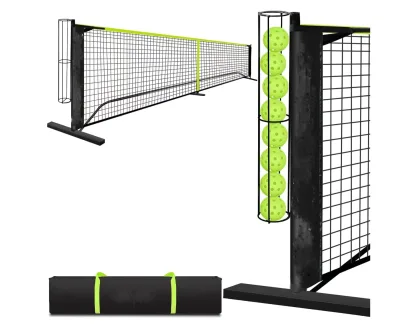
- Frame Integration: The wheels should be integrated into a sturdy frame structure. The product attributes list "6.7m Portable Pickleball Net" and "Mini Pickleball Net," indicating that the wheel system is likely part of a portable frame rather than a standalone net. The frame must be rigid enough to maintain the 0.91m height without sagging, even when the net is under tension.
Buyers should also consider the adjustment mechanisms for height and tension. Competition nets often require precise height adjustments to meet official standards. While the text does not explicitly detail height adjustment knobs, the presence of "Customization" and "Customized Logo" suggests that the frame design may be modular. The standard height for pickleball nets is 36 inches at the sidelines and 34 inches at the center, though the observed size of 0.91m (approx. 36 inches) suggests a simplified or specific regional standard. Verification of the height adjustment range is essential to ensure the net can be set to the correct regulation height for the specific league or tournament rules being followed.
Compliance, Certification, and Regulatory Standards
Navigating the compliance landscape for sports equipment requires a clear understanding of what constitutes a "competition" standard. The provided product data includes references to "prod_standard" with values like "912213cm" and "92x19x14cm." These figures appear to represent packaging dimensions rather than playing surface standards, which creates a potential area of confusion for buyers. It is crucial to distinguish between the physical dimensions of the product when packed and the regulatory dimensions of the playing equipment.
For a net to be deemed suitable for "Competition" and "Training" as listed in the attributes, it must adhere to the standards set by governing bodies such as the USA Pickleball Association (USAPA) or the International Federation of Pickleball (IFP). While the supplied text does not list specific certification numbers (e.g., ISO 9001 or specific sports safety certifications), buyers must request documentation proving that the net's dimensions, mesh size, and tension meet these official guidelines. The "Standard" attribute in the data should be cross-referenced with the latest rulebooks to ensure that the 6.7m length and 0.91m height are acceptable for the intended market.
Furthermore, the material composition must be safe for athletes. The mention of "PE/Polyester/PP" materials is common, but buyers should verify that these materials are free from harmful chemicals, especially if the nets are used by youth or children, as indicated by the "Target Audience: Youth, Professional Players, Children, Adult" attribute. The "Age Group: 3-70" specification reinforces the need for a product that is safe for a wide demographic. While no specific chemical certifications are listed in the source text, the procurement process should include a request for Material Safety Data Sheets (MSDS) or compliance with REACH and RoHS regulations, particularly for products manufactured in China, which is the listed place of origin.
Cost Drivers and Pricing Structure Analysis
The observed price range for these products is between $0.50 and $55.80 USD. This wide variance indicates significant differences in product quality, feature sets, and order volumes. The lower end of the spectrum likely corresponds to basic nets, perhaps the "Mini Pickleball Net" or simpler training versions, while the higher end likely reflects the full-size "22FT Pickleball Net with Wheels" with advanced features like robust locking mechanisms and premium materials.
Several factors drive the cost of a competition-style net:
- Wheel Assembly: The inclusion of high-quality, lockable universal wheels significantly increases the manufacturing cost compared to static nets. The complexity of the wheel mechanism and the durability of the materials used are primary cost drivers.
- Material Quality: Nets made from high-tenacity polyester fiber with high abrasion resistance will cost more than those made from standard polyethylene. The "Tear Strength" and "High Tenacity" attributes suggest a premium product tier.
- Customization: The availability of "Customized Logo" and "Customized" options adds to the cost. Buyers seeking branded equipment for tournaments or clubs should expect a price premium for the setup and printing of custom logos.
- Order Volume (MOQ): The observed Minimum Order Quantity (MOQ) ranges from 1 to 300 units. Buyers purchasing a single unit for personal use will pay the full retail price, while bulk buyers can negotiate lower unit costs. The "Selling Units: Single item" attribute suggests that single-unit purchases are possible, but the high MOQ of 300 indicates that wholesale pricing is available for larger orders.
Buyers should be cautious of prices that seem too low for a "competition" net. A price near $0.50 likely refers to a component or a very basic training net, not a full competition system with wheels. The $55.80 upper limit is more realistic for a complete, high-quality portable net system. When evaluating quotes, buyers should ensure that the price includes the full assembly, including the frame, wheels, and tensioning system, rather than just the netting itself.
Supplier Evaluation and Quality Control Protocols
Selecting a supplier for competition-grade equipment requires a rigorous evaluation process. The product data indicates that the place of origin is "China," specifically "Guangdong, China," a major manufacturing hub for sports equipment. While this region offers competitive pricing and a wide range of suppliers, it also necessitates strict quality control measures. The "Brand Name: oem" attribute suggests that many suppliers operate as Original Equipment Manufacturers, producing goods for other brands. This means the buyer may be dealing directly with the factory, which can be advantageous for cost but requires careful vetting.
Key criteria for supplier evaluation include:
- Production Capacity: Verify the supplier's ability to meet the required order volume. The MOQ range of 1-300 suggests flexibility, but buyers should confirm lead times for larger orders to ensure timely delivery for upcoming tournaments.
- Quality Assurance Processes: Ask for details on the supplier's quality control (QC) procedures. Since the product attributes mention "Abrasion Resistance" and "Tear Strength," the supplier should have in-house testing capabilities or third-party test reports to validate these claims.
- Sample Availability: The attribute "Sample: Avaibale" (Available) is a significant advantage. Buyers should always request a physical sample before placing a bulk order. This allows for a hands-on inspection of the wheel locking mechanism, the net tension, and the overall build quality.
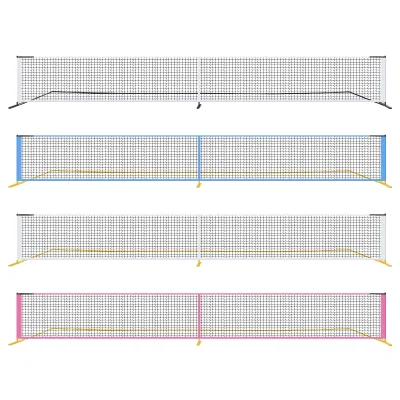
- Customization Capabilities: If the buyer requires a "Customized Logo," they should assess the supplier's printing capabilities and the quality of the customization. The "Color: Black or as Your Request" and "Color: Yellow" attributes indicate color flexibility, but the supplier must demonstrate consistency in color matching and logo placement.
Quality control should also extend to the packaging. The "prod_packing: Bag" and "OPP Bag" options suggest different levels of protection. For competition equipment, a sturdy, padded bag is preferable to a simple OPP bag to prevent damage during transit. Buyers should specify packaging requirements in their purchase orders to ensure the net arrives in perfect condition.
Long-Term Procurement and Maintenance Considerations
Investing in a competition-style pickleball net with lockable wheels is a long-term decision that involves ongoing maintenance and replacement costs. The "Target Audience" includes "Professional Players" and "Children," indicating that the net will be subjected to varying levels of wear and tear. Professional play involves high-impact shots and frequent setup/teardown, while youth play may involve rougher handling.
To ensure the longevity of the equipment, buyers should consider the following maintenance strategies:
- Wheel Maintenance: The lockable wheels are the most likely point of failure. Buyers should establish a routine for cleaning the wheels and checking the locking mechanism for wear. Lubrication may be necessary to prevent rust or seizing, especially if the nets are used outdoors.
- Net Replacement: The mesh, made of PE, Polyester, or PP, will eventually degrade due to UV exposure and abrasion. Buyers should plan for periodic replacement of the netting while retaining the frame and wheels to save costs. The "Customization" aspect allows for easy replacement of the net with a new one featuring the same logo.
- Storage: Proper storage is essential to extend the life of the net. The "Bag" or "OPP Bag" packaging should be used to protect the net from dust, moisture, and UV rays when not in use. The "Single package size" dimensions suggest that the net is compact enough for indoor storage, which is ideal for preventing weather damage.
- Spare Parts: When sourcing, buyers should inquire about the availability of spare parts, such as replacement wheels, tensioning cords, or netting. This ensures that the equipment can be repaired rather than replaced entirely, reducing long-term procurement costs.
In conclusion, sourcing a competition-style pickleball net with lockable universal wheels requires a balance of technical verification, supplier vetting, and long-term planning. By focusing on the specific dimensions, material properties, and wheel mechanisms outlined in the product data, buyers can secure equipment that meets the high standards of competitive play while ensuring durability and safety for all users. The wide range of observed prices and MOQs offers flexibility for different budget levels, but the emphasis must remain on quality and compliance to ensure the net performs reliably in a tournament environment.
FAQs
What are the standard dimensions for a competition pickleball net?
The standard dimension is 6.7 meters in length by 0.91 meters in height. This size aligns with competition requirements and is observed in the product specifications for full-size nets.
Can I get a customized logo on the net?
Yes, customized logos are available for this product. Buyers can request specific branding to be applied to the net, which is suitable for clubs or tournament organizers seeking unique identification.
What materials are used to construct the net?
The net is constructed from PE, Polyester, or PP materials. Some variants specifically use Polyester Fibre, which offers high tenacity and abrasion resistance for durable performance during play.
How much does a single unit weigh?
The single gross weight is approximately 8.5 kilograms. This weight supports the portability of the unit while ensuring stability, though some components may be listed with lighter weights requiring verification.
Is the net suitable for youth and professional players?
Yes, the target audience includes youth, children, adults, and professional players. The age group specification ranges from 3 to 70 years, making it versatile for various skill levels and demographics.
What is the minimum order quantity for bulk purchases?
The minimum order quantity ranges from 1 to 300 units depending on the supplier. Buyers can purchase single items for personal use or place larger orders for wholesale distribution and events.
Where is the product manufactured?
The product originates from China, specifically Guangdong. This location is a major hub for sports equipment manufacturing, offering competitive pricing and a wide range of supplier options for international buyers.